






Styles & Periods

Surrealism
Surrealism was initially a French philosophical movement, born from a desire to expand the human imagination and find meaning therein. The powerful and influential writer André Breton founded the movement in 1924, after experiencing disillusionment with the more negative movement, Dadaism. The goals of his new vision were to free thought from reason, and to record the automated ideas of the subconscious, verbally and visually. In many ways, Surrealism was not a formalized movement, but rather a recommended lifestyle adjustment. Anti-rationalist sentiment ran strong in Surrealism, and elements of fantasy and dreams took new precedence in art making. Sigmund Freud’s theories on the human psyche and dream analysis were used loosely as guidelines for many of the artists. Among the visual artists, three main methods of production can be delineated. Max Ernst and André Masson focused on automatism, experimenting with ways to relinquish control of the materials. Salvador Dalí and Yves Tanguy projected ultra-detailed, hallucinatory dreamscapes into the art world. And artists juxtaposed objects in sculptures and paintings, as in the work of René Magritte. The scope of the artists involved directly in the Surrealist movement is vast, and is only matched by the number of younger artists affected by Surrealism, who were starting their careers in the 1930s and 1940s, and later became leaders of the Abstract Expressionists.
- 20th Century Architecture
- 20th Century Photography
- 20th Century Sculpture
- Abstract Expressionism
- Aegean Art
- African Art
- Archaic Asian Art
- Art Nouveau
- Arte Povera
- Ashcan School
- Avant-Garde
- Barbizon School
- Baroque
- Bauhaus
- Body Art
- Buddhist Art
- Byzantine Art
- Carolingian Art
- Celtic Art/ Early Medieval Art
- Chinese Painting
- Color-Field Painting
- Computer Art
- Conceptual Art
- Constructivism
- Contemporary Art in Asia
- Cubism
- Dadaism
- De Stijl
- Die Blaue Vier
- Die Brücke
- Divisionism
- Early Christian Art
- Early Renaissance
- Earthworks
- Egyptian Art
- Environmental Art
- Etruscan Art
- Expressionism
- Fauvism
- Feminist Art
- Funk Art
- Futurism
- Gothic Art
- Graffiti Art
- Greek Art
- Happenings
- Hard-Edge Painting
- Hellenistic Art
- High Renaissance
- Impressionism
- Indian Art
- International Gothic
- Islamic Art
- Kinetic Art
- Korean Ceramics
- Mannerism
- Metaphysical Painting
- Minimalism
- Modernism
- Native American Art
- Near Eastern Art
- Neoclassicism
- Neo-Expressionism
- Neoplasticism
- Northern Renaissance
- Oceanic Art
- Optical Art
- Ottonian Art
- Outsider Art
- Performance Art
- Photo Realism
- Pop Art
- Post-Impressionism
- Postminimalism
- Post-Painterly Abstraction
- Precisionism
- Prehistoric Art
- Pre-Raphaelites
- Process Art
- Public Art
- Purism
- Realism
- Regionalism
- Rococo
- Roman Art
- Romanesque
- Romanticism
- Social Realism
- Spatialism
- Suprematism
- Surrealism
- Symbolism
- Synthetism
- Tonalism
- Video Art


|
|
|
|||||
|
|
|
|||||






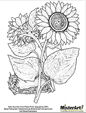 Download FREE coloring
book pages to color at
home or school.
View Pages »