






Styles & Periods

Early Renaissance
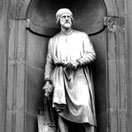
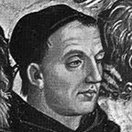
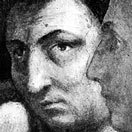
Art of the Early Renaissance in Italy, or the Quattrocento, represents a profound break from the vision of medieval art. There was extreme wealth and papal power to fund the rise of talented artists. A resurgence of interest in Classical texts and models made the time appear to be a rebirth of classicism, thereby coining the French word for rebirth, Renaissance. Florence was the undisputed center of the Quattrocento was from 1400-1450. Filippo Brunelleschi perfected his system for representing three-dimensional space in a painting or relief, one-point perspective. Masaccio's frescoes in the Santa Mari Novella demonstrate the Early Renaissance interest in perspective. Other artists such as Sandro Botticelli used humanism to inspire classical and mythological subjects. Sculptor Donatello embodied a fervent approach to perspective, realism and classical subject, and his figures seem fully capable of natural human movement, rather than appearing flat and weightless. In northern Italy, Giovanni Bellini perfected his use of color and light that would become the signature of Venetian painters. The work of these artists paved the way for the masters of the High Renaissance, who would create some of the most moving art of the west.
- 20th Century Architecture
- 20th Century Photography
- 20th Century Sculpture
- Abstract Expressionism
- Aegean Art
- African Art
- Archaic Asian Art
- Art Nouveau
- Arte Povera
- Ashcan School
- Avant-Garde
- Barbizon School
- Baroque
- Bauhaus
- Body Art
- Buddhist Art
- Byzantine Art
- Carolingian Art
- Celtic Art/ Early Medieval Art
- Chinese Painting
- Color-Field Painting
- Computer Art
- Conceptual Art
- Constructivism
- Contemporary Art in Asia
- Cubism
- Dadaism
- De Stijl
- Die Blaue Vier
- Die Brücke
- Divisionism
- Early Christian Art
- Early Renaissance
- Earthworks
- Egyptian Art
- Environmental Art
- Etruscan Art
- Expressionism
- Fauvism
- Feminist Art
- Funk Art
- Futurism
- Gothic Art
- Graffiti Art
- Greek Art
- Happenings
- Hard-Edge Painting
- Hellenistic Art
- High Renaissance
- Impressionism
- Indian Art
- International Gothic
- Islamic Art
- Kinetic Art
- Korean Ceramics
- Mannerism
- Metaphysical Painting
- Minimalism
- Modernism
- Native American Art
- Near Eastern Art
- Neoclassicism
- Neo-Expressionism
- Neoplasticism
- Northern Renaissance
- Oceanic Art
- Optical Art
- Ottonian Art
- Outsider Art
- Performance Art
- Photo Realism
- Pop Art
- Post-Impressionism
- Postminimalism
- Post-Painterly Abstraction
- Precisionism
- Prehistoric Art
- Pre-Raphaelites
- Process Art
- Public Art
- Purism
- Realism
- Regionalism
- Rococo
- Roman Art
- Romanesque
- Romanticism
- Social Realism
- Spatialism
- Suprematism
- Surrealism
- Symbolism
- Synthetism
- Tonalism
- Video Art
|
|
|
||||
|
|
|
||||






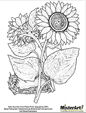 Download FREE coloring
book pages to color at
home or school.
View Pages »